

Grandparents’ Rights in PA

The U.S. Supreme Court provides parents with the fundamental right over their children. However, grandparent rights are regulated at the state level. Does Pennsylvania have grandparents’ rights that can protect your relationship with your grandchild? You might even wonder if you can take custody, especially if the child lived with you for a significant period.
The court considers many different factors, including the parents’ wishes and capabilities, and the child’s best interest. Custody arrangements determine who can spend time with and make decisions for the child. Depending on the circumstances, parents or grandparents may get physical or legal custody, or both. Understanding the relevant Pennsylvania laws can help you maintain your relationship with your grandchild.
Do Grandparents Have Rights in PA?
Technically, grandparents don’t have the legal right to see their grandchildren in Pennsylvania. However, they may have standing, which lets them file for custody. The courts prioritize parents’ rights primarily. If you want to continue spending time with your grandchild, certain situations may grant you:
- Partial physical custody: This custody arrangement lets you assume physical custody of your grandchild for less than a majority of the time. You may hear partial physical custody referred to as “visitation.”
- Supervised physical custody: In this arrangement, a monitor accompanies your grandchild to ensure their safety. The court may designate a nonprofessional or professional monitor. Nonprofessional monitors can be family members or friends. Professionals have the necessary education and training on domestic violence, child abuse, trauma, sexual assault and the impact of domestic violence on children.
- Shared physical custody: Shared physical custody lets more than one person spend significant periods with the child. This arrangement is more than just a weekend visit. However, since the courts prioritize parents’ wishes, grandparents rarely have shared physical custody.
Physical Custody vs. Legal Custody
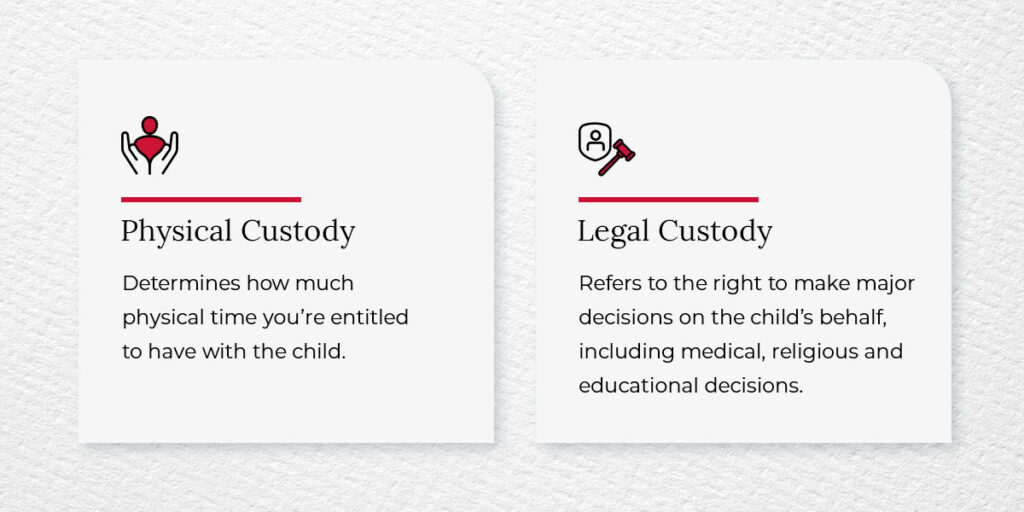
Physical custody determines how much physical time you’re entitled to have with the child. Legal custody refers to the right to make major decisions on the child’s behalf, including medical, religious and educational decisions. As a grandparent, you may get physical custody, legal custody or both, depending on your situation.
For instance, having partial physical custody can mean your grandchild can spend time with you on the weekend. Meanwhile, the parent maintains legal custody.
When to File for Legal Custody
You may have a chance at both physical and legal custody if you meet these statutory conditions:
- Your relationship with your grandchild started with a parent’s consent or through a court order.
- You assume or are willing to assume responsibility for your grandchild.
Additionally, the child must also meet one of the following conditions:
- The court considers a child a dependent regarding juvenile matters.
- The child is at risk of parental abuse, neglect or incapacity.
- They lived with you for 12 consecutive months before a parent took them away.
If your grandchild lived with you for at least a year, you must file for custody within six months.
However, if you are already acting as a parent to your grandchild, meaning you are acting in loco parentis, you only need to provide proof when filing. In loco parentis means you have put yourself in a situation of a lawful parent, assuming their obligations, even without formal legal adoption. Parental duties include meeting the child’s physical, emotional and social needs.
When to File Partial or Supervised Physical Custody
Even without rights as grandparents in PA, you can file for partial or supervised physical custody if:
- The child’s parents have passed away.
- The child’s parents are undergoing a custody dispute.
- The child lived with you for a year, and you filed for custody within six months after the parent took them away.
As with legal custody, you must have started building a relationship with your grandchild with a parent’s consent or due to a court order during the parents’ custody dispute. The parents must have also disagreed that you should have custody.
Different factors can affect the court’s decision. For instance, the court may consider the amount of physical contact you have with your grandchild before filing, if the custody interferes with the parent-child relationship, and if the custody is in your grandchild’s best interest. Even if you qualify to file for custody, PA courts give special weight to a fit parent’s decision. The court may only grant you time if it clearly benefits your grandchild.
However, if you’re worried about your history, you can still ask the court for time with your grandchild. The court may require supervised physical custody for safety concerns.
When to File Shared Physical Custody
The court may grant you shared physical custody if it’s in your grandchild’s best interest. However, the parents’ rights and wishes come first. Courts strongly favor parents unless the parents harm or are unfit to care for the child. You may also need to prove your deeply established caregiving role, if any.
Because there is no law regarding grandparents’ rights in Pennsylvania, be sure to manage your expectations and understand your chances — it’s rare for courts to grant grandparents shared physical custody.
Can Biological Grandparents Obtain Custody of Adopted Children?
You generally cannot obtain custody of your grandchild if their parents place them for adoption. Legally speaking, adoption severs the child’s biological relationships. However, you may still be able to file for custody if a stepparent, other grandparent or great-grandparent adopted the child.
If the court ordered you partial, supervised or shared custody in the past, adoption by someone other than the three exceptions terminates this arrangement. However, even without custody, adoptive parents may voluntarily let you visit your grandchild.
What Are the Grounds to Terminate Parental Rights in PA?
Certain actions can involuntarily terminate a parent’s parental rights. If you’re concerned about your grandchild’s safety, you can file a report of intent to adopt your grandchild and a petition to terminate the parents’ parental rights. Pennsylvania law allows termination in these situations:
- The parent fails or refuses to perform parental duties and has shown a desire to give up their parental rights for at least six months.
- The parent has been incapacitated or continuously abused, neglected or refused the child, causing a lack of parental care necessary for the child’s well-being. The parent also refuses to remedy the situation.
- The parent is not the child’s natural father.
- Authorities can’t identify or find the parent, and no parent claims the child within three months.
- The child has been in an out-of-home placement for at least six months, and the parent cannot or chooses not to remedy the causes of the arrangement.
- The parent knows or has the capability to know of their newborn, but refuses to reside with the child; marry the other parent; or, for at least four months, maintain contact and support the child.
- The child was conceived as a result of rape or incest.
- The child has not lived with their parents for at least 12 months, and the conditions for this arrangement continue to exist.
- The child was a parent’s victim, and the parent was charged with aggravated assault; criminal homicide; or an attempt, solicitation or conspiracy to commit either crime.
- The parent sexually abused the child or their sibling.
- The parent must register as a sexual offender.
Can a Parent Deny a Grandparent Visitation in PA?
If the court orders it, parents can’t deny your visitation or custody arrangement. However, because grandparents don’t have rights in PA, parents can refuse your visitation if you don’t meet custody requirements and the court rejects your petition. For instance, you might have lived with your grandchild for eight months before the parent took them away, falling short of the 12-month requirement.
Why Trust MPL Law
MPL Law has been helping clients navigate family matters for over 30 years. We understand that family law can be complex and that situations can be highly emotional. Our dedicated team of attorneys can guide you through the legal challenges. To us, you are more than just a case or a transaction.
We understand the effects court decisions have outside the courtroom. Because we regularly litigate before the local courts, we know their particular processes and preferences. We’ve also presented cases in the Superior Court of Pennsylvania. You can count on us to find the optimal solution for each situation.
Navigate PA Laws With MPL Law
While grandparents don’t have rights in the state of Pennsylvania, you may have standing, which lets you file for custody of your grandchild. The courts prioritize parents’ wishes, and they can refuse to allow you to maintain your relationship. However, the courts may grant you physical or legal custody in certain situations, such as if the child’s safety is at risk. If the parents’ separation is amicable or the adoptive parents are open to it, you may not even need custody and can visit your grandchild voluntarily.
Family law can be complex, but you don’t have to navigate it on your own. Our experienced team at MPL Law can help you understand the process and identify whether you qualify for physical or legal custody. Schedule a consultation today to get started.