

Now the Real Work Begins
Written by James Sanders
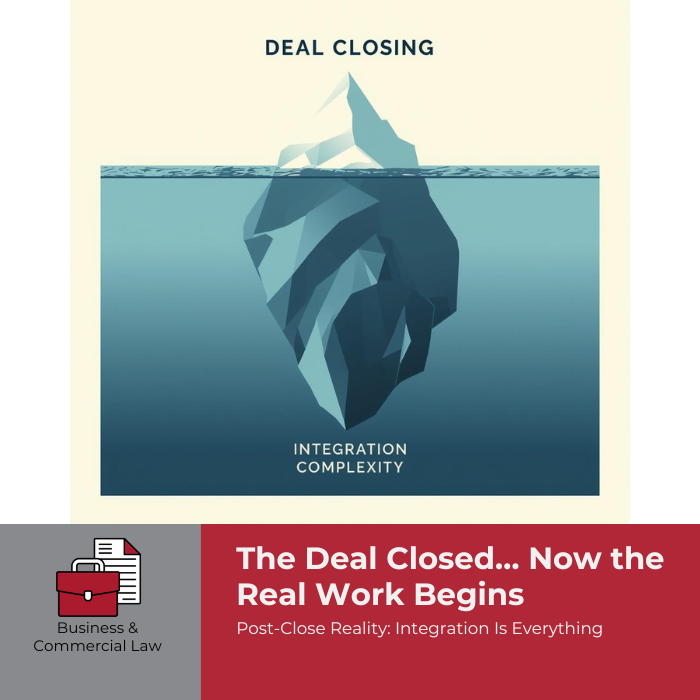
The deal closed and everything is running smoothly….said no buyer ever. More times than not, there are missed items or integrations that still need to happen. If you are the seller, you have money in your account, but there is probably an escrow or possibly some type of earnout. So, you are not off the hook either. The integration activities that go on right after closing are critical to prepare for, implement and be flexible with in order to set the transaction up for long term success. Below are some helpful tips to consider:
1. Integration governance – Define the integration roadmap, workstreams (HR, IT, Finance, Ops, Commercial, Legal), and how you will track synergies and risks
2. Confirm legal, regulatory, and entity basics – Verify that all closing conditions, consents, licenses, permits, bank/insurance and other change-of-control items are actually effective in operations.
3. Stabilize finance and cash management – Ensure uninterrupted billing, collections, payables, payroll, and banking access from Day 1; Align financial reporting, chart of accounts, and initial synergy tracking so you can measure whether the acquisition is accretive.
4. Protect revenue and customer relationships – Execute a coordinated customer communication plan explaining continuity of service, points of contact, and any near-term changes in pricing or terms; Assign ownership of key accounts across legacy and acquired sales teams, with clear rules for territories, credit, and channel conflicts.
5. Align leadership and org structure – Clarify the post-close org chart, reporting lines, and who is accountable for what across both legacy and acquired teams; Establish a unified leadership cadence (staff meetings, KPIs, decision forums) and, where possible, include at least one strong leader from the acquired business in governance.
6. Retain key talent and address HR basics – Identify critical personnel and implement retention, stay bonuses, or bespoke arrangements where needed to preserve value; Harmonize core HR items (titles, compensation bands, benefits transition plan) and ensure Day-1 basics like access badges, email, and payroll are in place.
7. Drive cultural integration and communications – Articulate the combined company story, deal rationale, and “what’s changing vs. what’s not” in simple, repeated messages for employees and managers; Use structured town halls, FAQs, and manager toolkits to prevent rumor-driven culture clashes and disengagement.
8. Ensure IT access and cybersecurity – Provide immediate access to essential collaboration tools (email, conferencing, shared drives, VPN) and basic support channels for new employees; Put in place interim cybersecurity controls and a roadmap to standardize security, networks, and critical business systems over time.
9. Harmonize core operations and processes – Map the most critical end-to-end processes (order-to-cash,
procure-to-pay, record-to-report, service delivery) and decide where to adopt “best of both.”; Create phased integration plans for supply chain, production, and service workflows so you reduce disruption while moving toward the target operating model.
10. Formalize a synergy and risk tracking model – Translate the deal model into a working synergy and cost-to-achieve tracker, with specific owners, milestones, and KPIs; Maintain a live integration risk register tied to your diligence findings, with mitigation owners and clear escalation paths to the board or IMO.
About the Author