

Beyond “I Do”: Marriage Money and Legacy Series
Written by Akshaya Senthil Kumar
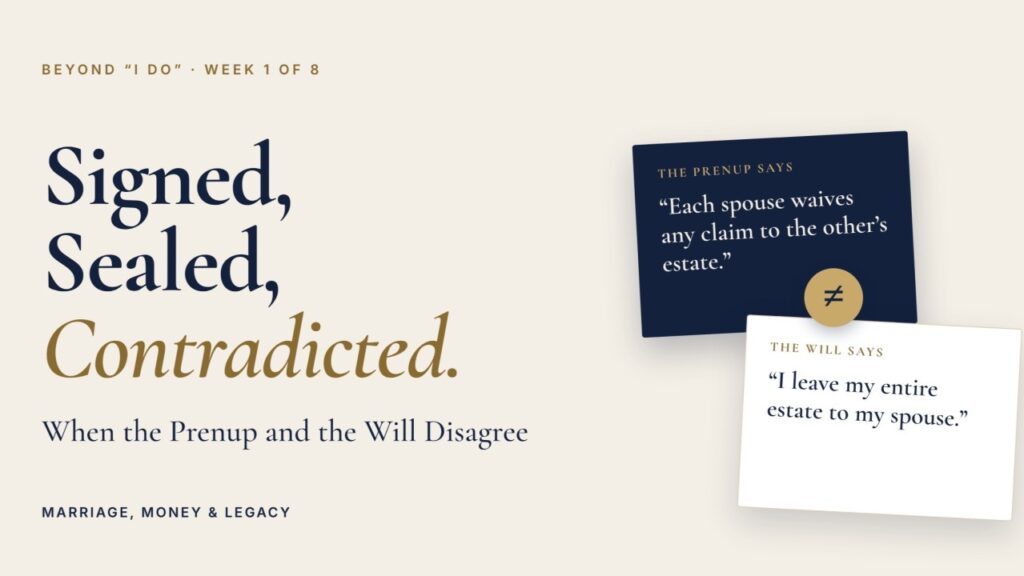
Signed, Sealed, Contradicted.
Two documents. Two lawyers. One very expensive disagreement.
Most estate disputes don’t begin with bad intentions. They begin like this:
Susan is walking down the aisle for the second time, and this time she’s planning ahead. She owns a family business that she hopes her two adult children will one day take over and run. So before the wedding, she and her fiancé, Mark, sign a prenup: if they divorce, each walks away with what they brought in, and each waives “all rights” in the other’s property. Everyone shakes hands feeling good.
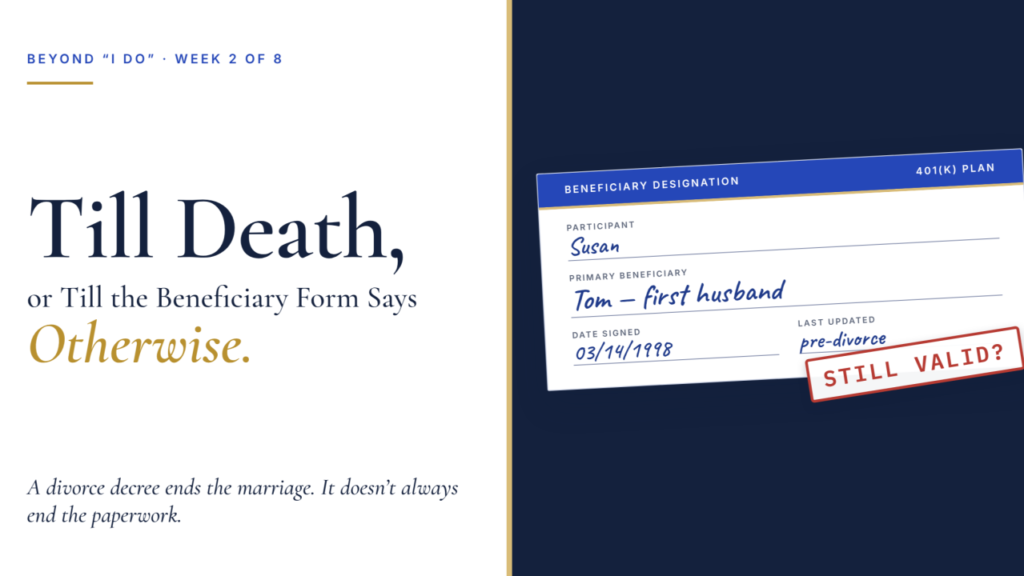
Till Death, or Till the Beneficiary Form Says Otherwise.
A divorce decree ends the marriage. It doesn’t always end the paperwork.
Last week, Susan left behind three valid documents that didn’t agree. This week, we open the drawer she forgot about.
Remember her old 401(k), still naming her first husband, Tom? They divorced decades ago, and nobody mentioned a beneficiary form. Susan dies, and the plan administrator cuts a check to Tom. Her children are stunned: “But they’re divorced. Doesn’t the law cut him out automatically?” Mark, her husband of ten years, is stunned too: “But I’m her spouse.” And Tom, who hasn’t thought about this plan since the Clinton administration, is delighted.
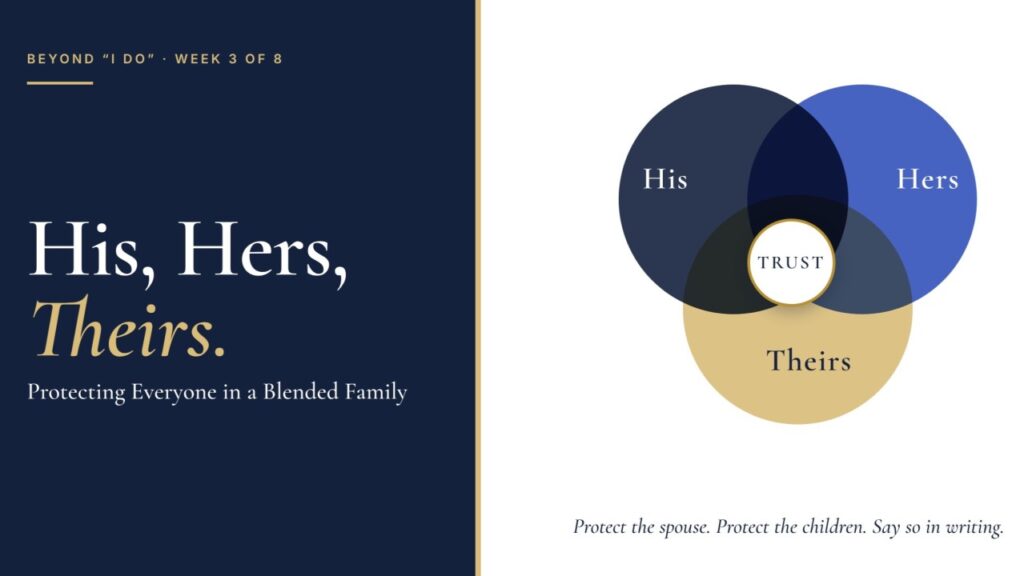
His, Hers, Theirs – Protecting Everyone in a Blended Family
Protect the spouse. Protect the children. Say so in writing.
Last week, a beneficiary form paid the wrong husband. This week, a family plans so that no one is paid by accident.
Meet Daniel and Priya, a couple who remarried at 58. He has two daughters. She has a son. They share one home, two retirement accounts, and one very polite silence about what happens when either of them dies.
A trust is a promise with a manager. A trustee holds the property and follows written instructions about three things: who benefits now, who benefits later, and who decides. For a blended family, those three answers are the whole plan. Daniel has three basic options.
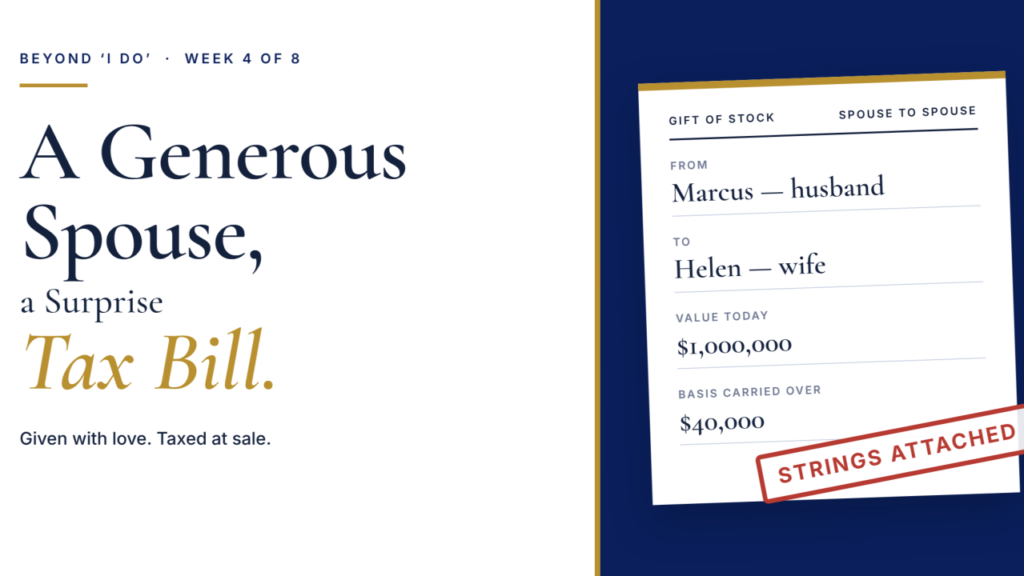
A Generous Spouse, a Surprise Tax Bill
Given with love. Taxed at sale.
Last week, a blended family planned intentionally so that no one is paid by accident. This week, a husband gives his wife a gift, and the tax bill arrives years later, addressed to her.
Meet Marcus and Helen, married thirty years. In 1996, Marcus bought stock for $40,000. Today it is worth $1 million. For their anniversary, he transfers all of it into Helen’s name.
On the day of the gift, nothing happens. Gifts between spouses who are both U.S. citizens qualify for an unlimited marital deduction, so there is no gift tax (I.R.C. § 2523(a)). The transfer is not a sale, so there is no income tax (I.R.C. § 1041(a)).
The surprise is what travels with the gift.
About the Author