

LLC in Name Only — Governance Gone Wild
Written by James Sanders
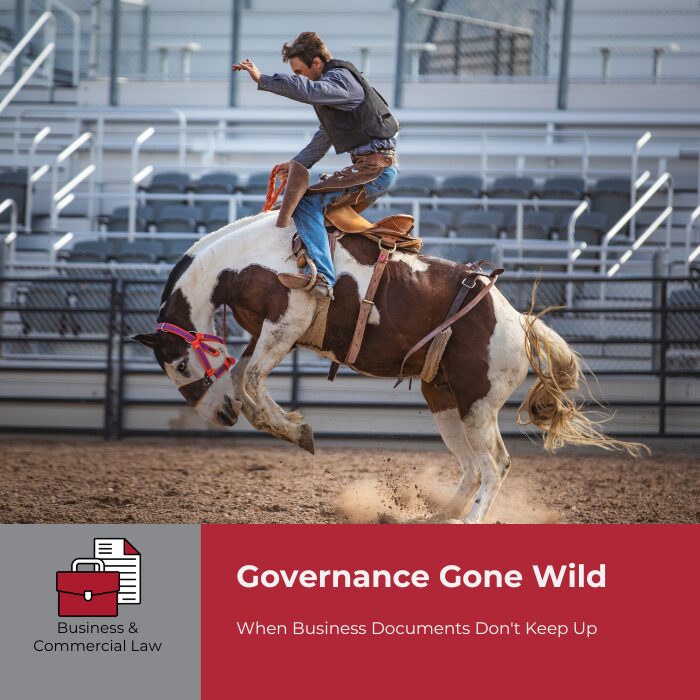
Oops Files, Part 1:
Some of the costliest legal problems start with a simple structural mistake: the business is not clearly set up, documented, or governed in a way that matches how it actually operates. Owners and management often treat entity choice and governance as a one‑time formation exercise, then leave documents and roles unchanged as the company grows, adds partners, or takes on new risks.
When structure and governance drift away from reality, several expensive issues tend to show up:
- Personal assets unexpectedly on the hook because owners mixed personal and business funds or never really separated individual and entity roles.
- Confusion over who can sign, approve deals, or bind the company, especially when old operating agreements or bylaws never caught up with today’s ownership and management.
- Messy transitions when an owner retires, passes away, divorces, or wants out, and there is no clear roadmap for buy‑outs, succession, or voting control.
Good governance does not have to be complicated, but it does have to be intentional. At a minimum, growing businesses should regularly:
- Confirm that the current entity form still makes sense for liability, tax, and growth (for example, revisiting whether a sole proprietorship or simple partnership should be converted to an LLC or corporation).
- Review and update core governance documents—operating agreements, bylaws, shareholder or member agreements—so they reflect current ownership, decision‑making, and succession expectations.
- Clarify roles for owners, managers, and any board or advisory group, including who has authority to approve financings, major contracts, and changes in control.
For many companies, a practical “governance tune‑up” can be done on a predictable cycle—annually or every few years—as part of broader strategic and financial planning. That tune‑up turns governance from a dusty set of documents into a working framework for accountability, smoother decision‑making, and better protection when something goes wrong.
In upcoming “Oops Files” installments, we’ll move from structure and governance into contracts and handshake deals, employment and HR systems, intellectual property, and regulatory blind spots—each a familiar area where small missteps can turn into big dollar problems.
About the Author